Fitzrovia is London's creative village — a compact quarter of Georgian townhouses, artists' studios, and bohemian character wedged between the West End and Bloomsbury. From Charlotte Street's restaurant-lined elegance to the quiet residential squares of Fitzroy Square and Cleveland Street, our architects deliver sensitive renovations that honour this artistic neighbourhood's distinctive character.
Fitzrovia takes its name from the Fitzroy Tavern on Charlotte Street — the pub where Dylan Thomas, Augustus John, and the bohemian intelligentsia drank through the 1920s and 1930s. But the architecture predates the name by a century. The area was developed from the 1790s as a genteel residential quarter, with Fitzroy Square (designed by Robert Adam) as its centrepiece. The resulting grid of three- and four-storey Georgian townhouses remains remarkably intact, giving Fitzrovia an intimate village character that belies its central London location.
The housing stock tells the story of Fitzrovia's evolution: pristine Georgian townhouses on Fitzroy Square and Charlotte Street, Victorian workshop conversions on Howland Street and Maple Street, Edwardian mansion blocks along Great Portland Street, and a scattering of purpose-built artists' studios with distinctive north-light roof glazing. Many Georgian properties retain their original proportions — intimate room sizes compared to Bloomsbury's grander houses — with characteristic Fitzrovia features including narrow staircases, compact kitchens, and the small rear yards that once served as outside privies.
For property owners in W1T, the key challenge is Fitzrovia's split borough jurisdiction. The boundary between Camden and Westminster runs roughly along the centre of the area — Cleveland Street and the eastern streets fall under Camden, while Portland Place and the western streets fall under Westminster. Each borough maintains its own conservation area policies, and the Charlotte Street Conservation Area spans both authorities. Our architects navigate this dual-borough landscape daily.
From our Finchley Road studio, our architects have extensive experience with both Camden and Westminster planning departments. We understand Fitzrovia's particular architectural character — smaller-scale Georgian properties that require sensitive design solutions different from the grander townhouses of neighbouring Bloomsbury and Marylebone.
Design, build, and heritage expertise for Fitzrovia properties — shaped by deep knowledge of the local planning landscape and conservation requirements.
Rear, side, and wraparound extensions to Fitzrovia period homes. Conservation area design expertise for local approval.
Dormer and mansard conversions respecting Fitzrovia rooflines, ridge heights, and conservation area sightlines.
Full basement dig-downs and cellar conversions for Fitzrovia properties. Structural engineering and waterproofing expertise.
Listed building specialists. Sash window restoration, original feature conservation, and the balance between preservation and contemporary living.
Highgate falls under the Camden & Westminster (split). The Highgate Conservation Area is one of the largest in London and covers virtually the entire village, spanning Camden, Haringey, and Islington. Planning permission is required for almost all external works, and each borough applies its own design standards.
Fitzroy Square is Grade I listed — one of Robert Adam's finest London compositions. Many surrounding properties are Grade II or II*. Listed Building Consent is required for works affecting these buildings' character. The area also contains several purpose-built artists' studios with distinctive roof glazing that conservation officers are keen to preserve. Our architects understand each borough's specific expectations.
View Camden planning portal →Charlotte Street and East Marylebone Conservation Areas protect Fitzrovia across both boroughs. Georgian character preservation is strictly enforced.
Camden and Westminster divide Fitzrovia. Your planning authority depends on your exact location. Each borough applies different conservation policies, fees, and timescales.
Purpose-built artists' studios with north-light roof glazing are recognised heritage assets. Conservation officers resist the loss of these distinctive architectural features.
Both Camden and Westminster offer pre-application services. Essential for listed buildings and properties near the borough boundary.
Realistic cost ranges for the most common project types in Highgate. Conservation area requirements and the logistical constraints of central London construction add approximately 10–20% to standard pricing.
Robert Adam's Fitzroy Square, Charlotte Street's bohemian legacy, and the artists' studios that defined London's creative quarter.
How Robert Adam's east and south ranges (1790–1794) created one of London's most refined Georgian compositions — and why the square remains Grade I listed.
From the Bloomsbury Group to Dylan Thomas — the pubs, studios, and townhouses that made Fitzrovia London's most creative neighbourhood.
How the Post Office Tower (1964) and the subsequent redevelopment of Howland Street and Cleveland Street transformed the northern edge of Fitzrovia.
Selected projects from across London.

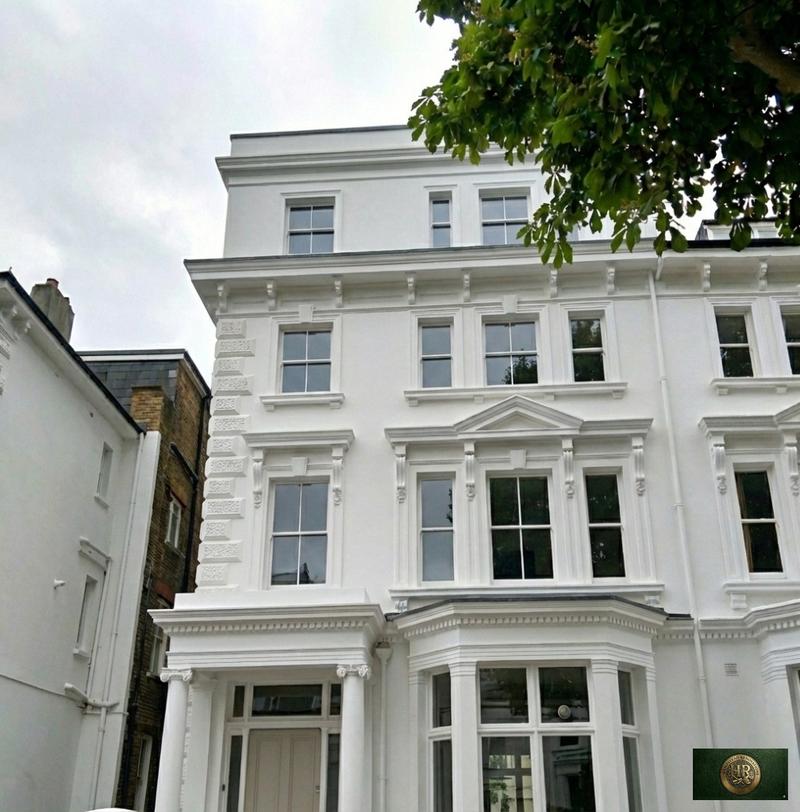
Five-storey house extension, full basement conversion, loft conversion and complete refurbishment within Belsize Park's conservation area.
View Case Study →
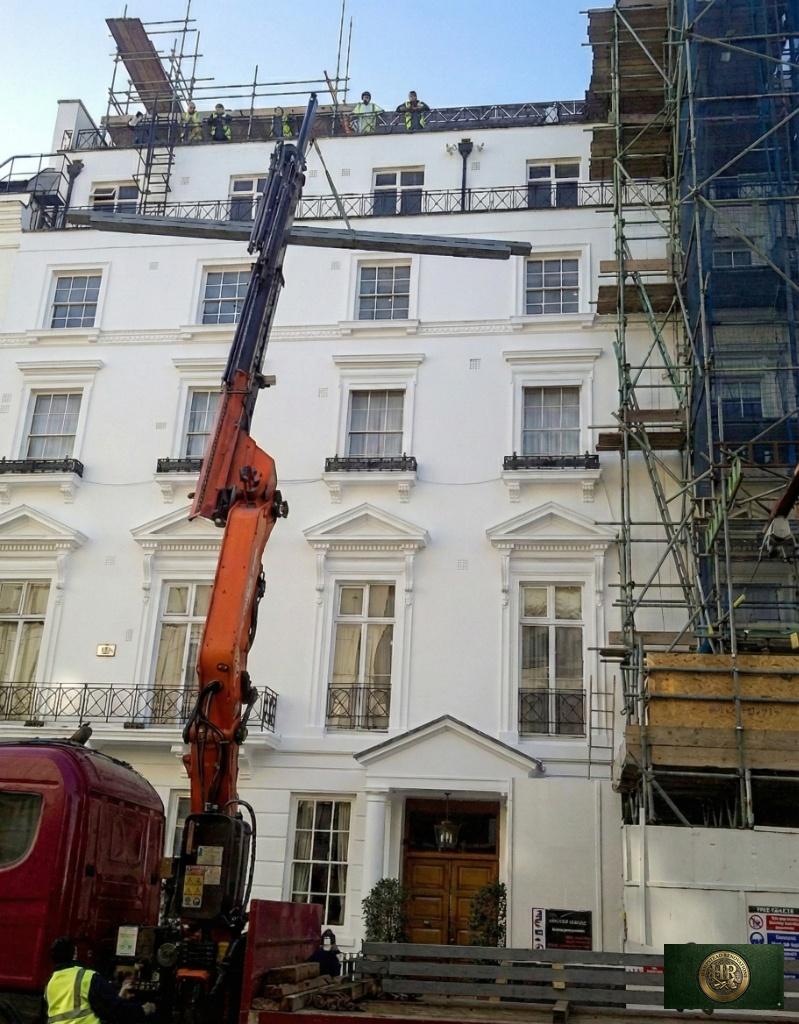
Penthouse duplex refurbishment and roof reconstruction within a Grade II listed setting, unifying the top two levels into seamless luxury living.
View Case Study →
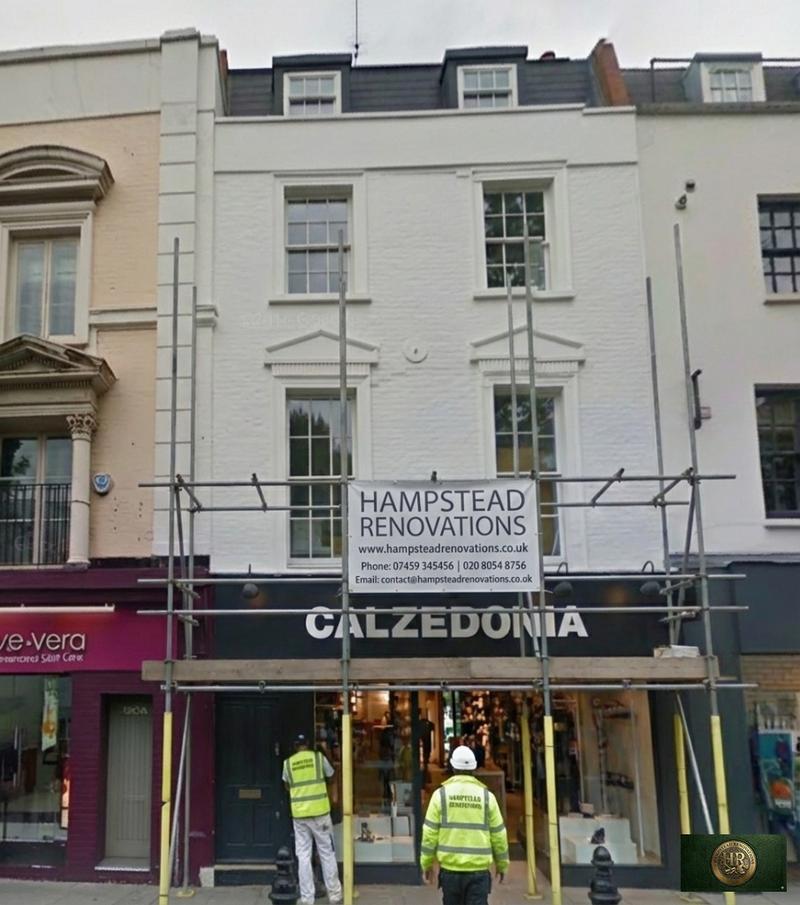
Office-to-retail and residential conversion delivering the Calzedonia store fit-out with three high-spec apartments above, preserving the original façade.
View Case Study →Use these area-specific guide pages to move from broad research into the main build routes people compare in Fitzrovia W1T.
Fitzrovia is split between Camden and Westminster. Generally, properties east of Cleveland Street fall under Camden, while those west of it fall under Westminster — but the boundary is not always intuitive. Our architects know exactly which authority governs each street and have relationships with both planning teams.
Potentially — but conservation officers in both boroughs are protective of Fitzrovia's remaining purpose-built artists' studios, particularly their distinctive north-light roof glazing. Change of use from studio to residential requires planning permission, and you will likely need to demonstrate that the studio use is no longer viable. Our architects can advise on the best approach for your specific property.
Rear extensions to Georgian townhouses in W1T typically cost £2,800–£4,500 per square metre. Full refurbishments range from £550–£950 per square metre. Studio conversions cost £700–£1,200 per square metre. Central London logistical constraints add 10–20% to standard pricing. All projects delivered on fixed-price contracts.
Yes — rear extensions are the most common way to add space to Fitzrovia's compact Georgian houses. Both Camden and Westminster generally support single-storey rear extensions that are subordinate to the main building. The compact rear yards typical of W1T mean that extensions must be carefully designed to maximise floor area while maintaining acceptable levels of daylight and outlook.
Generally yes. Fitzrovia was developed as a slightly more modest residential quarter than neighbouring Bloomsbury, so the Georgian townhouses tend to have narrower frontages, smaller rooms, and more compact staircases. This makes intelligent space planning essential — our architects specialise in maximising living space within these intimate proportions.
Yes. Our in-house RIBA architects manage applications to both authorities. We determine which borough governs your property, prepare applications to that borough's specific requirements, and manage the process through to approval. We also handle Listed Building Consent, conservation area consents, and change-of-use applications.
Our initial consultation is free and carries no obligation. Visit our design studio on Finchley Road to explore material selections, meet our team, and discuss your project in person.
One team, one contract — from feasibility drawing to handover photograph. RIBA chartered architects, IStructE chartered engineers, RICS regulated surveyors, and FMB-registered build teams, all under a fixed-price design-build contract.
View Our Fitzrovia Builders Page