Holborn is London's ancient legal quarter — a neighbourhood of imposing Victorian commercial architecture, medieval Inns of Court, and an emerging residential market driven by the conversion of former offices and chambers into luxury apartments. From Lincoln's Inn Fields to Hatton Garden, our architects deliver expert renovations across this architecturally rich and complex quarter.
Holborn has been London's legal quarter since the medieval period, when the four Inns of Court — Lincoln's Inn, Gray's Inn, Inner Temple, and Middle Temple — established themselves around the boundary of the City of London. The area's architectural character was shaped by the Victorian era, when the legal profession's expansion filled Holborn with grand red-brick and terracotta office buildings, ornate chambers, and the imposing facades of High Holborn and Kingsway.
The residential stock in Holborn is predominantly conversion-led: former barristers' chambers on the edges of Lincoln's Inn Fields, Victorian commercial buildings on Theobald's Road and Red Lion Street converted to apartments, purpose-built Edwardian mansion blocks on the Lamb's Conduit Street fringes, and — increasingly — large-scale office-to-residential conversions using permitted development rights. The properties are characterised by generous ceiling heights, large windows, and substantial floor plates that lend themselves well to luxury lateral apartments.
For property owners in WC1V, the renovation landscape is shaped by Camden Council's conservation area policies, the high proportion of commercial-to-residential conversions requiring change of use consent, and the proximity of the Inns of Court — which maintain their own ancient governance independent of the borough council. The Hatton Garden Conservation Area and the Bloomsbury Conservation Area overlap into parts of Holborn, adding further complexity.
From our Finchley Road studio, our architects have extensive experience with Camden planning and the specific challenges of Holborn — converting commercial properties to residential use, navigating conservation area constraints, and delivering luxury residential fit-outs within buildings originally designed for offices and chambers.
Design, build, and heritage expertise for Holborn properties — shaped by deep knowledge of the local planning landscape and conservation requirements.
Rear, side, and wraparound extensions to Holborn period homes. Conservation area design expertise for local approval.
Dormer and mansard conversions respecting Holborn rooflines, ridge heights, and conservation area sightlines.
Full basement dig-downs and cellar conversions for Holborn properties. Structural engineering and waterproofing expertise.
Listed building specialists. Sash window restoration, original feature conservation, and the balance between preservation and contemporary living.
Highgate falls under the London Borough of Camden. The Highgate Conservation Area is one of the largest in London and covers virtually the entire village, spanning Camden, Haringey, and Islington. Planning permission is required for almost all external works, and each borough applies its own design standards.
Lincoln's Inn and its chapel are Grade I listed. Many Victorian commercial buildings on High Holborn and surrounding streets are Grade II or II*. The permitted development regime (Class MA) allows some office-to-residential conversions without full planning permission, but this does not apply in conservation areas. Our architects understand exactly which conversion routes are available for each Holborn property.
View Camden planning portal →Hatton Garden and Bloomsbury Conservation Areas overlap into Holborn. Camden enforces strict facade and roofline controls in these zones.
Office-to-residential conversions may qualify for Class MA permitted development rights — but this does not apply within conservation areas or to listed buildings. Prior approval is still required.
Properties adjacent to the Inns of Court face additional heritage and visual impact considerations. The Inns maintain their own governance independent of Camden Council.
Camden offers pre-application services. Essential for change-of-use applications, listed buildings, and conservation area works.
Realistic cost ranges for the most common project types in Highgate. The complexity of commercial-to-residential conversions and conservation area requirements add approximately 10–20% to standard pricing.
Medieval Inns of Court, Victorian commercial grandeur, and the transformation of London's legal quarter into a residential neighbourhood.
How the Inns of Court established themselves on the boundary of the City — and how their ancient governance continues to shape the neighbourhood today.
The story of the street where 90% of Britain's diamonds are traded — and the Victorian workshops and design studios that line it.
How Alfred Waterhouse's Gothic masterpiece (1879) set the tone for the ornate red-brick and terracotta buildings that define Holborn's commercial streetscape.
Selected projects from across London.

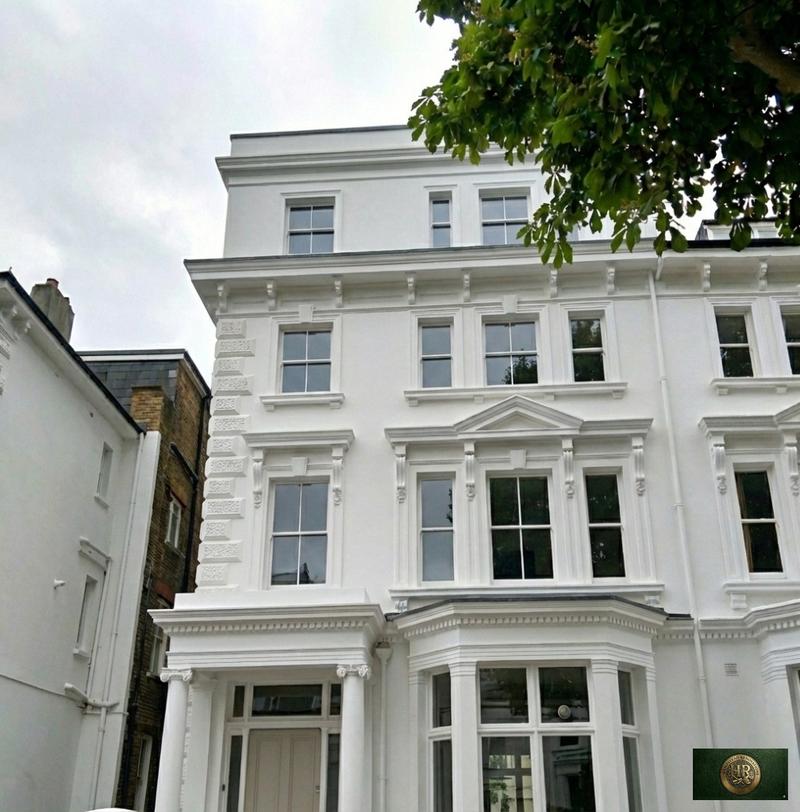
Five-storey house extension, full basement conversion, loft conversion and complete refurbishment within Belsize Park's conservation area.
View Case Study →
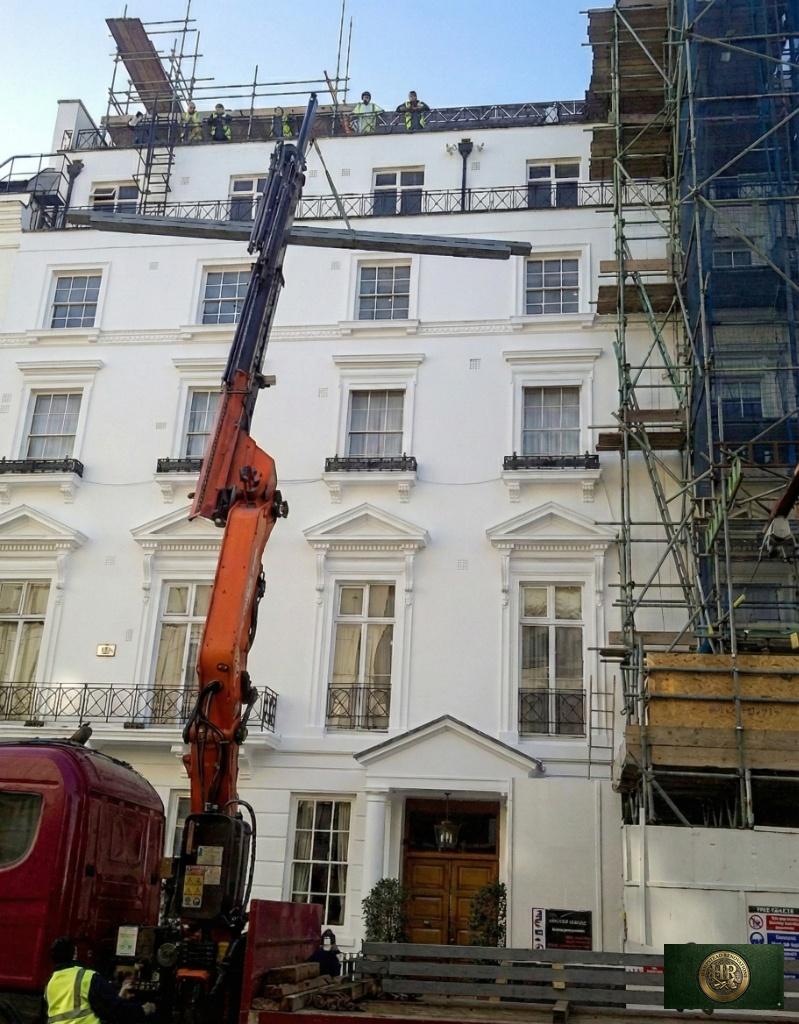
Penthouse duplex refurbishment and roof reconstruction within a Grade II listed setting, unifying the top two levels into seamless luxury living.
View Case Study →
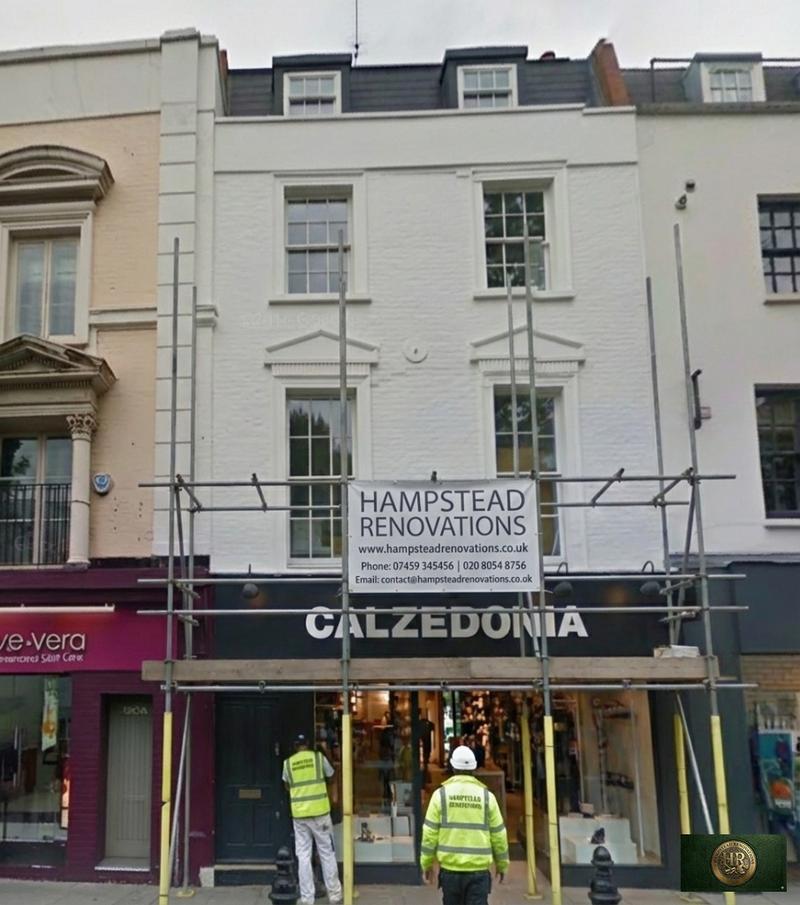
Office-to-retail and residential conversion delivering the Calzedonia store fit-out with three high-spec apartments above, preserving the original façade.
View Case Study →Use these area-specific guide pages to move from broad research into the main build routes people compare in Holborn WC1.
Potentially. Office-to-residential conversions (Class MA permitted development) may be possible outside conservation areas, subject to prior approval for flooding, transport, contamination, and natural light. Within conservation areas — including Hatton Garden and parts of Bloomsbury — full planning permission is required. Our architects assess each property individually to determine the most viable conversion route.
Parts of Holborn fall within the Hatton Garden Conservation Area or the Bloomsbury Conservation Area. Properties on the fringes may fall outside both. You can check your property's conservation area status on Camden's online planning map. Conservation area status significantly affects what works are possible — particularly for facade alterations and roof extensions.
Office-to-residential conversions in WC1 typically cost £600–£1,200 per square metre including change of use, building regulations, and luxury fit-out. Apartment refurbishments range from £500–£900 per square metre. Facade restoration costs £200–£450 per square metre. Central London logistical constraints add 10–20% to standard pricing. All projects delivered on fixed-price contracts.
Potentially — but roof extensions in conservation areas face significant scrutiny. Camden requires that any roof addition be set back from the building line, not visible from street level, and subordinate in scale and design. Outside conservation areas, permitted development rights may allow modest roof extensions without full planning. Our architects can assess the feasibility for your specific building.
Commercial-to-residential conversions present specific challenges: achieving adequate natural light in deep-plan buildings, soundproofing from neighbouring commercial uses, fire compartmentation between units, providing adequate outdoor amenity space, and meeting residential building regulations for ventilation and room sizes. Our architects specialise in solving these challenges to create genuinely comfortable homes.
Yes. Our in-house RIBA architects manage all Camden planning applications including change-of-use (Class MA prior approval and full planning), conservation area consent, and Listed Building Consent. We also manage the complete building regulations process for residential conversions — fire strategy, acoustic testing, ventilation design, and final sign-off.
Our initial consultation is free and carries no obligation. Visit our design studio on Finchley Road to explore material selections, meet our team, and discuss your project in person.
One team, one contract — from feasibility drawing to handover photograph. RIBA chartered architects, IStructE chartered engineers, RICS regulated surveyors, and FMB-registered build teams, all under a fixed-price design-build contract.
View Our Holborn Builders Page